

17 Startups in the Running for CHF 120 000
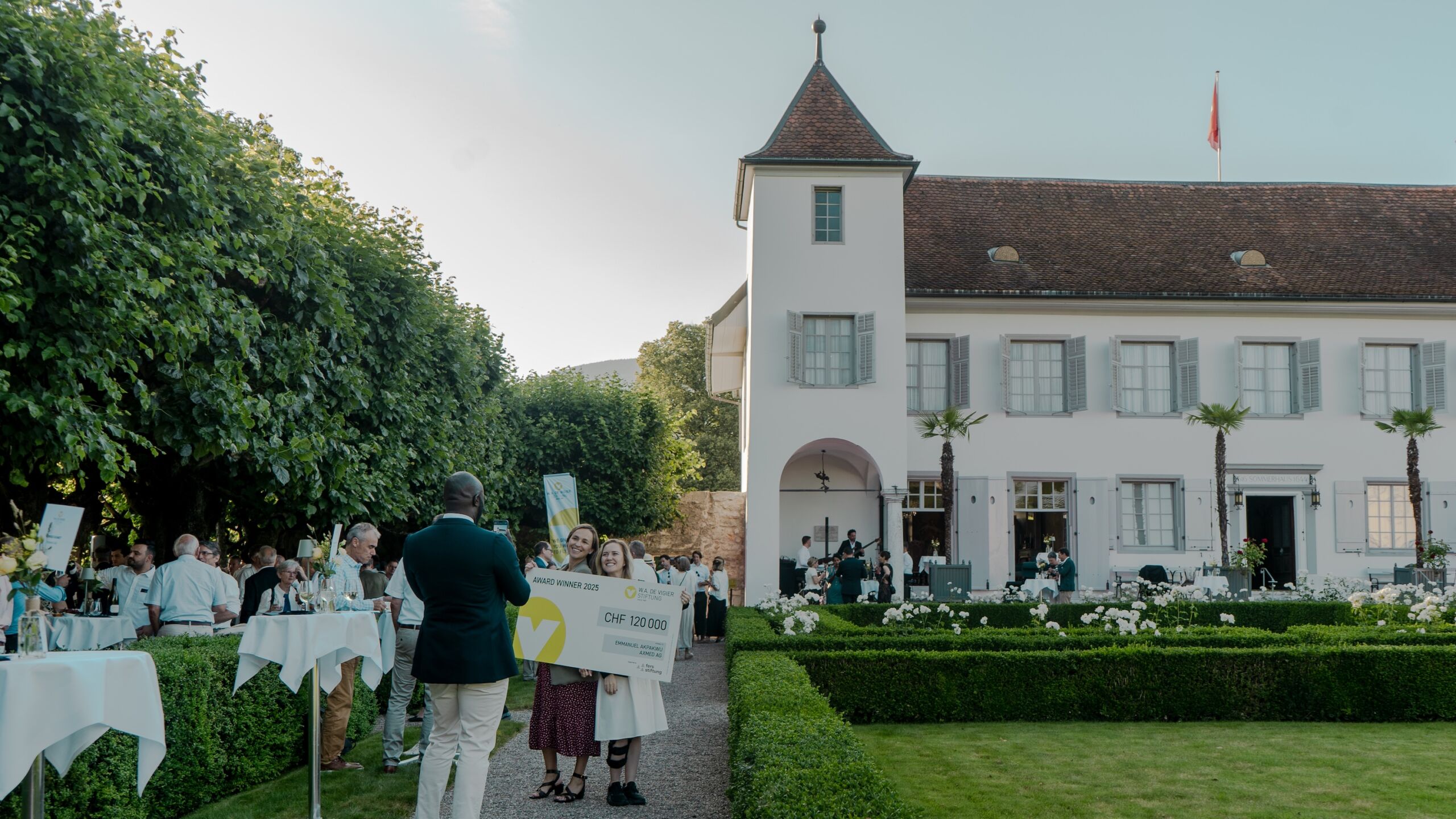
Solothurn, March 11, 2026. The race for Switzerland’s most prestigious startup award is heating up. 17 promising startups have made it to the next stage of the W.A. de Vigier Awards — one step closer to securing one of up to five CHF 120 000 prizes.
Chosen from 50 young companies that pitched on Selection Day in Solothurn on March 3, the shortlisted startups impressed the foundation board, a live audience, and online viewers with their ideas and entrepreneurial drive. The competition started with more than 200 applications across seven industry clusters.
“The shortlisted startups span a wide range of industries and ideas. They truly represent an eclectic cross-section of innovation,” says Céline Bedu, COO of the W.A. de Vigier Foundation.
In a slight departure from tradition, this year’s shortlist includes 17 startups rather than the usual 15 — a reflection of an exceptionally strong applicant field. The companies will now be evaluated through expert reports and in-depth interviews with the foundation board over the coming weeks. The next milestone will be the selection of the Top 10 during two presentation days in early May, leading up to the award ceremony on June 10, 2026.
These are the Top 17 CEOs and their startups (in alphabetical order)
Riccardo Acciarino / OOVIE Studios SA / Lugano (TI)
Interactive films that evolve with live music
In an era of endless digital content, live cultural events and brands must find new ways to keep their audience engaged. OOVIE Studios develops interactive films that adapt to live music in real time, turning performances into audiovisual experiences that change with every note. By combining AI, film, and live musical performance, the technology lets visuals react instantly to what musicians play on stage. This allows orchestras, festivals, and brands to create immersive events that draw audiences in, spark emotional responses, and bring people closer to cultural experiences.
Arka Banerjee / 80SBio AG / Basel (BS)
Point-of-care molecular diagnostics for infectious diseases
Access to reliable diagnostic testing remains limited in many parts of the world, forcing clinicians to treat infectious diseases without knowing the exact cause. 80SBio develops QuantR, a point-of-care system that brings lab-grade molecular testing directly to patients. Using its UniqRT chemistry, the technology runs parallel RT-qPCR directly from raw patient samples, removing complex preparation steps. A low-cost cartridge and compact reader allow healthcare workers to load a finger-prick sample and test for multiple infectious diseases at once. This enables fast, affordable diagnostics and helps clinicians deliver the right treatment even in low-resource settings.
Gwenael Hannema / OrthoSens SA / Biel (BE)
Sensors that track healing after orthopedic surgery
Orthopedic recovery is often monitored through occasional X-rays and patient self-reports, which can detect complications too late. OrthoSens turns standard orthopedic implants into connected devices that measure healing in real time. A tiny battery-free sensor inside the implant is powered by an external wearable and streams data on load, micro-motion risk, and bone fusion to the SensApp. Surgeons and physiotherapists can track recovery through clear dashboards, while patients follow progress at home, enabling earlier interventions and reducing avoidable imaging, hospital visits, and revision surgeries.
Samuel Heiniger / Iron Energy AG / Zurich (ZH)
Long-duration energy storage using iron oxide
Renewable energy from solar and wind is produced when the sun shines or the wind blows, not necessarily when electricity is needed. This creates a growing need for large-scale, low-cost energy storage to balance supply and demand over longer periods, including across seasons. Iron Energy develops a storage technology that converts surplus electricity into hydrogen and stores it in iron. The hydrogen reduces iron oxide to metallic iron, allowing energy to be stored safely and cheaply. When electricity is needed again, the iron is oxidized with steam, producing hydrogen that can be converted back into electricity.
Seoho Jung / Chiral Nano AG / Dübendorf (ZH)
Post-silicon semiconductors with nanomaterials
The semiconductor industry is approaching the physical limits of silicon while demand for computing power continues to grow. Nanomaterials such as carbon nanotubes promise faster and more energy-efficient transistors, but existing production methods cannot scale to industrial manufacturing. Chiral Nano develops equipment that integrates nanomaterials into chips with high precision. Its patented process grows high-quality nanomaterials, selects the best structures using automated microscopy and AI, and transfers them robotically onto wafers. This enables semiconductor manufacturers to build post-silicon chips for future technologies such as AI and quantum computing.
Jonathan Koifman / FrostForge SA / Vessy (GE)
Making ice from sunlight
Cooling is essential for preserving food, medicines, and livelihoods, yet many regions depend on fragile power grids or dirty diesel generators. When cooling fails, food spoils, vaccines lose potency, and communities face economic losses. FrostForge develops containerized systems that convert heat from sunlight or waste sources into sub-zero cooling. Using solar-thermal collectors and adsorption chillers, the system freezes water and stores cold without energy-intensive compressors. The plug-in module installs quickly, can be serviced locally, is monitored remotely, and produces 160 kg of ice every day.
Sébastien Le Fouest / Windworks SA / Lausanne (VD)
Smart vertical-axis wind turbines to generate local power
Wind energy remains underused in many regions as large wind farms face long approval processes, high infrastructure costs, and local opposition. At the same time, farms, municipalities, and small businesses investing in solar power face electricity shortages in winter and at night. Windworks develops compact vertical-axis turbines for on-site power generation. Its key innovation is real-time blade pitch control: each blade adjusts its orientation using onboard sensors and a proprietary algorithm that adapts to changing wind conditions, increasing energy yield and turbine lifetime. Quiet systems under 30 meters can typically be permitted within a year.
Hagen Lihl / UpGrid AG / Baar (ZG)
Software to connect and manage local renewable energy
As more homes and businesses install solar panels, electricity is increasingly produced locally. But today’s energy markets are not designed to manage this local, decentralized production efficiently. UpGrid develops a software platform that connects solar systems, batteries, and other local energy assets. The platform helps households, companies, and energy providers control when electricity is used, stored, or sold. By automating trading, billing, and coordination, UpGrid allows locally produced energy to be used more efficiently. This increases self-consumption, stabilizes prices, and makes renewable energy investments more attractive.
Giancarlo Mattiello / Cria Technologies SA / Plan-les-Ouates (GE)
High-vacuum containers for reliable transport of sensitive biological materials
Modern therapies such as cell and gene treatments, IVF samples, stem cells, and advanced diagnostics require extremely stable temperature conditions during transport. Yet many shipments still rely on dry ice, which is difficult to handle and prone to temperature fluctuations that can compromise valuable therapies. Crìa Technologies develops high-vacuum insulated containers that dramatically reduce heat transfer. Its first product, Crìa Go, is shoulder-carriable, cabin-compatible, and operates with reusable ice packs instead of dry ice. It offers cryogenic-level performance while remaining simple to ship with standard couriers.
Maude Rolland / VECTOPIA / Geneva (GE)
A solution for simpler and more reliable gene therapy production
Gene and cell therapies offer new hope for treating many genetic diseases and cancers, but their progress is limited by a major bottleneck: producing the viral carriers that deliver these therapies into human cells is complex, costly, and difficult to scale. Vectopia is developing a new production platform based on engineered cell lines that already contain all the elements needed to create these viral vectors. Instead of relying on complicated multi-step manufacturing processes, production can simply be activated when needed, making it faster, more consistent, and easier to scale. By simplifying this critical step, Vectopia aims to accelerate the development and availability of next-generation gene and cell therapies.
Robert Schreiber / Alpinasana AG / Zurich (ZH)
Early detection and targeted nutrition to combat malnutrition
Malnutrition is a widespread but often overlooked problem in healthcare: up to 30% of hospital patients and more than half of elderly people are affected, leading to serious health complications and high healthcare costs. Alpinasana addresses this challenge with a combined digital and nutritional approach. Its AI-based system analyzes meal trays in hospitals to identify patients at risk of malnutrition at an early stage. These patients can then receive specially developed medical nutrition products designed to provide balanced nutrition and encourage regular use through good taste and variety. By helping caregivers detect and address malnutrition earlier, Alpinasana aims to improve patient outcomes while reducing healthcare costs.
Arthur Sebesteny / Dental Robotics
Portable system for preventive dental care anywhere
Oral diseases affect more than 3.5 billion people worldwide and are linked to serious chronic conditions, yet preventive dental care is often difficult to access. Many patients avoid regular visits due to travel, waiting times, or fear of clinical environments. Dental Robotics addresses this challenge with an ultra-portable 3-in-1 dental hygiene system and digital platform that enables professional care outside traditional clinics. Hygienists can deliver preventive treatments in homes, workplaces, and care facilities. By bringing dental care closer to patients, Dental Robotics aims to improve access, encourage regular check-ups, and support better long-term oral and overall health.
Eliott Sounigo / LAYERED GmbH / Lupfig (AG)
Mobile robots for automated surface finishing on construction sites
The construction sector faces growing labor shortages while demand for building renovation and new housing continues to rise. At the same time, tasks such as plastering and surface coating remain physically demanding and difficult to automate. LAYERED addresses this challenge with a lightweight mobile robot that automates surface finishing directly on construction sites. The system scans walls and allows workers to select the surfaces to be treated through a simple interface, after which the robot applies plaster or coatings with consistent quality. Designed to integrate seamlessly into existing construction workflows, the system reduces manual effort and material waste, helping the industry meet growing construction and renovation needs despite limited labor.
Martin Stadler / Qendra
Control technology addressing a key bottleneck in quantum computing
Quantum computers promise major advances in areas such as drug discovery, materials science, and secure communication. However, building and operating these machines remains extremely complex. Many quantum computers rely on individual atoms that must be controlled with extraordinary precision using specialized electronics and software. Current control systems are often difficult to set up and require extensive customization, slowing research and development. Qendra addresses this challenge with an integrated hardware and software platform designed specifically for these atomic-scale quantum systems. By simplifying system control and improving stability, Qendra helps researchers run experiments more efficiently and accelerate the development of practical quantum computers.
Silvan Suter / Thermal Transformer AG / Pfäffikon (SZ)
Turning waste heat into energy-efficient cooling
Cooling today relies almost entirely on electricity and already accounts for around 10% of global power consumption. In data centers, up to 30% of electricity is used for cooling alone, and demand is rising rapidly with the growth of AI computing. At the same time, large amounts of low-temperature waste heat remain unused. Thermal Transformer addresses this challenge with a heat-driven adsorption cooling system that converts waste heat directly into cooling. The technology can operate with heat as low as 45 °C, enabling data centers to use their own waste heat to cool additional IT equipment. By reducing electricity demand for cooling, Thermal Transformer helps data centers operate more efficiently despite growing computing needs.
Emily Thompson / Augury Medical GmbH / Biel (BE)
Predicting heart failure risk in pacemaker patients
Pacemakers help millions of patients regulate their heart rhythm, yet more than 20% of recipients develop pacing-induced heart failure within a few years of implantation. Today, this complication is usually detected only after symptoms appear, when the disease is already advanced and costly to treat. Augury Medical addresses this challenge with a noninvasive software tool that predicts an individual patient’s risk using standard ECG data. The system analyzes the heart’s electrical signals and provides doctors with a risk assessment and visual heart map to support treatment decisions. By identifying high-risk patients earlier, Augury Medical enables preventive care and helps reduce the long-term burden of heart failure.
Fabian Wiesemüller / FireDrone AG / Dübendorf (ZH)
Heat-resistant drones for firefighting and industrial emergencies
During fires and high-temperature incidents, emergency teams often lack reliable information because smoke blocks visibility and conditions change rapidly. Entering these areas puts firefighters and industrial inspectors at serious risk, while conventional drones fail when temperatures rise. FireDrone addresses this challenge with a drone designed to operate in extreme heat. Using advanced insulation and thermal management, it can fly in temperatures of up to 200 °C and stream live thermal and video images. This allows teams to assess dangerous situations without entering the hot zone themselves. By providing critical insights in extreme environments, FireDrone helps protect responders and limit damage during emergencies.
About the W.A. de Vigier Awards
The W.A. de Vigier Award is the oldest award for young entrepreneurs in Switzerland and also one of the most highly endowed Swiss startup prizes. Over the past 39 years, the foundation has distributed
CHF 15.6 million of seed money to over 160 young ventures. The results are flourishing startups, successful IPOs, multiple company exits and above all, many newly created jobs.
Thanks to the continued support of our funding partner FERS, the total prize money will reach up to
CHF 700,000 this year, further strengthening the award’s impact on Switzerland’s startup ecosystem.
The following aspects are relevant for the evaluation of the projects: The entrepreneurial personality, the degree of innovation, the value for society as a whole, the technical and financial viability, market prospects and the potential for job creation.
Download Press Release
Image in Print Quality
Press Inquiries
Please contact
Hanna Byland and Céline Bedu
CEO and COO W.A. de Vigier Foundation
info@devigier.ch